
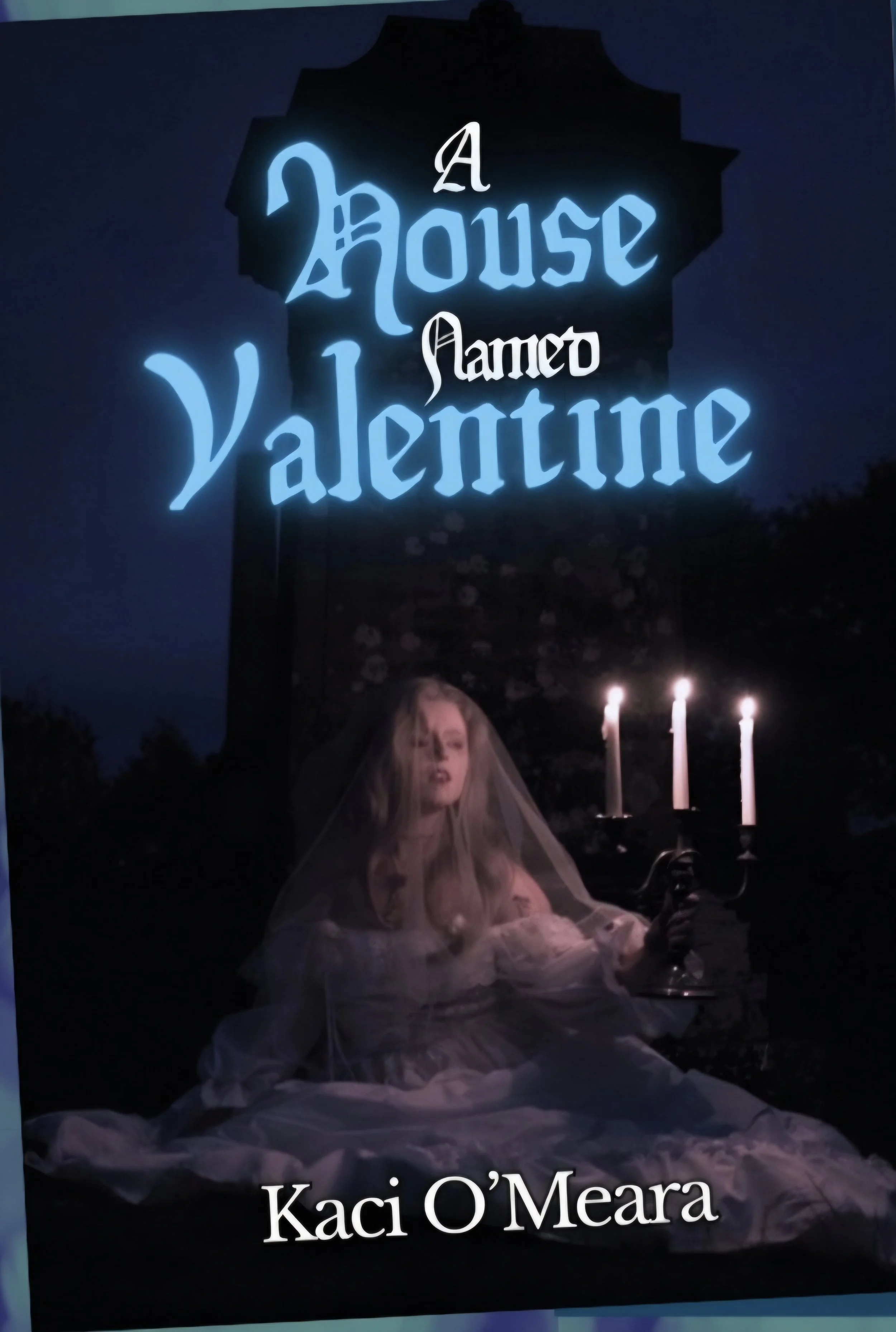
Front cover image by @raelikeslenses
Blending the blunt realism of Perkins Gilman, and the romantic juxtaposition of Poe’s horror - all with a Glaswegian edge. As a fanatic of the literary macabre and period horror, Kaci O’Meara’s book, A House Named Valentine, lured me in with a promise of being a modern classic, and it delivered.
Self-published at 22-years-old, Kaci has had a challenging but rewarding experience, from her writing process to the book launch, I wanted to learn more about what it takes to become an author so young.
Q: Can you give us a brief outline about your book without giving anything away?
A: House Named Valentine is a story about a woman in the 1800’s trapped in an unhappy marriage with a man who doesn’t value her. She struggles with depression and extreme insecurities brought on by her husband's infidelity. This causes her to suffer from paranoia and delusions, believing that her house is alive and in love with her, which brings ruin to her life and the lives of those around her...It’s a wild ride, that’s all I’ll say.
Q: Can you talk about your inspirations and writing process?
A: I think when reading this story, my literary inspirations become very clear, as I am very inspired by the works of Poe, and Charlotte Perkins Gilman’s The Yellow Wallpaper, both writers have been pillars in my writing journey. They inspired the genre, but the inspiration for the story itself comes from an incredibly difficult experience of mine. I was casually seeing someone who, very quickly into our physical relationship, went out of their way to make me feel insecure and unwanted. Charlotte’s obsession with the statue came from my own feelings towards the other women in my life, who I was being constantly compared to. It brought out a lot ugly emotions, primarily jealousy as well as changing my relationship with my body as I developed problems with eating and body image.
I didn’t have a set process when it came to writing , I wrote in silence at night when I felt I could give myself to the story. There were months where I wrote nothing at all, and days where it was all I could think about. This story came from the most damaged parts of myself at a time I was at my lowest as a way of processing my pain and grief as a result of mistreatment. My writing process was grief: completely non-linear, and sometimes too hard to face.
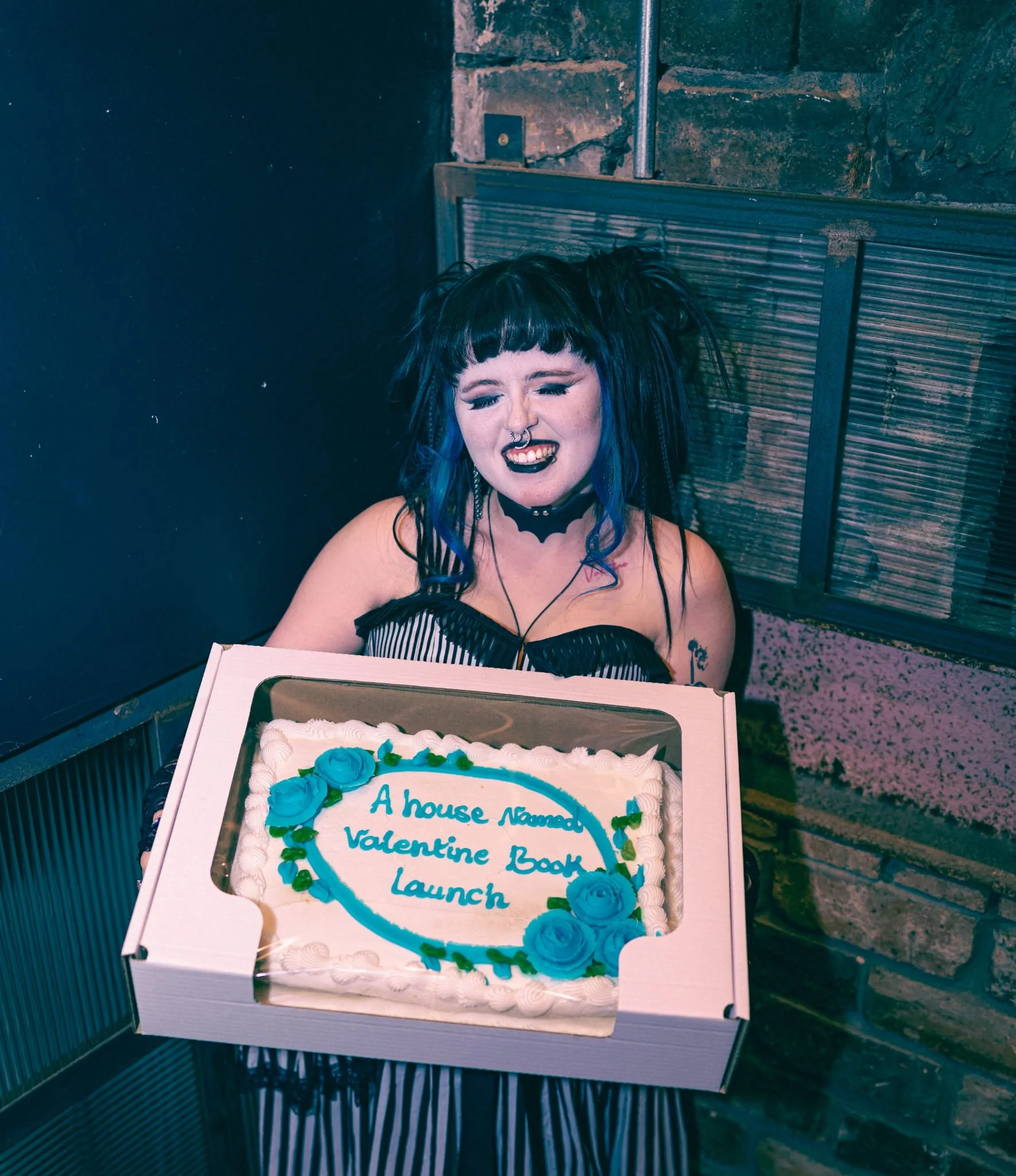
Photography by @lonewolf_photography
Q: I noticed you have a suggested playlist while reading, where did you get this idea and why these songs?
A: Music is a very important part of my life, but it’s also an important part of my writing process. I knew when I wanted to publish that there had to be a playlist page, it was a non-negotiable. My writing, particularly my poetry, is tied to my emotions. I’m a deeply emotional woman, and music is another way of processing how I feel when I struggle to write it down.
When it comes to writing and putting my head down, I need complete silence to focus, but when I would take breaks to research and plan, I had my playlist on as a way to help me tap back into those emotions, which was difficult to relive but very necessary to my process.
The songs included in the playlist are a mix of songs that I feel represent Charlotte’s journey, the gothic genre of the book itself, and at the forefront, my own journey at the time of writing it. Most of them are the songs I was listening to while I was in pain and trying to overcome it. Songs like Ethel Cain’s ‘Strangers’ and ‘Skin to Skin’ by Movements were the songs I was scream crying on the bathroom floor to. As soul destroying everything I went through was, music got me through it, it got me writing, and it is so intertwined that I think something would have been missing without it.
Q: Can you go into your interest in horror and any nods to other writers there may be?
A: Ever since I was a wee lassie, I was drawn to all things spooky and scary. I loved Halloween, The Corpse Bride, and Grizzly Tales for Gruesome Kids. Apparently when I was a toddler the only thing that could get me to sleep was Silence of The Lambs, which might have been some kind of sign that I'd turn out the way I have. When it comes to horror, I’m not big into slashers, I’m all about the psychological, supernatural, and suspenseful. I’d say my favourite horror films are Insidious and Get Out. But I have to give honourable mentions to His House, Hereditary, Before I Wake, and The Night Eats the World.
It wasn’t until I got to high school that I started to discover my passion for written horror. I remember reading Roald Dahl’s short stories ‘The landlady’ and ‘A Lamb to the slaughter’ for the first time and falling in love with them. The character of Lady Mary Wright in A House Named Valentine did come from A Lamb to the Slaughter’s Mary Malone, that’s probably the most obscure reference in the book. Dahl, Duffy, and Gilman are writers who shaped the early days of my writing career so there are absolutely easter eggs to the three of them and their work, but I'm not going to spoil anything else for readers...
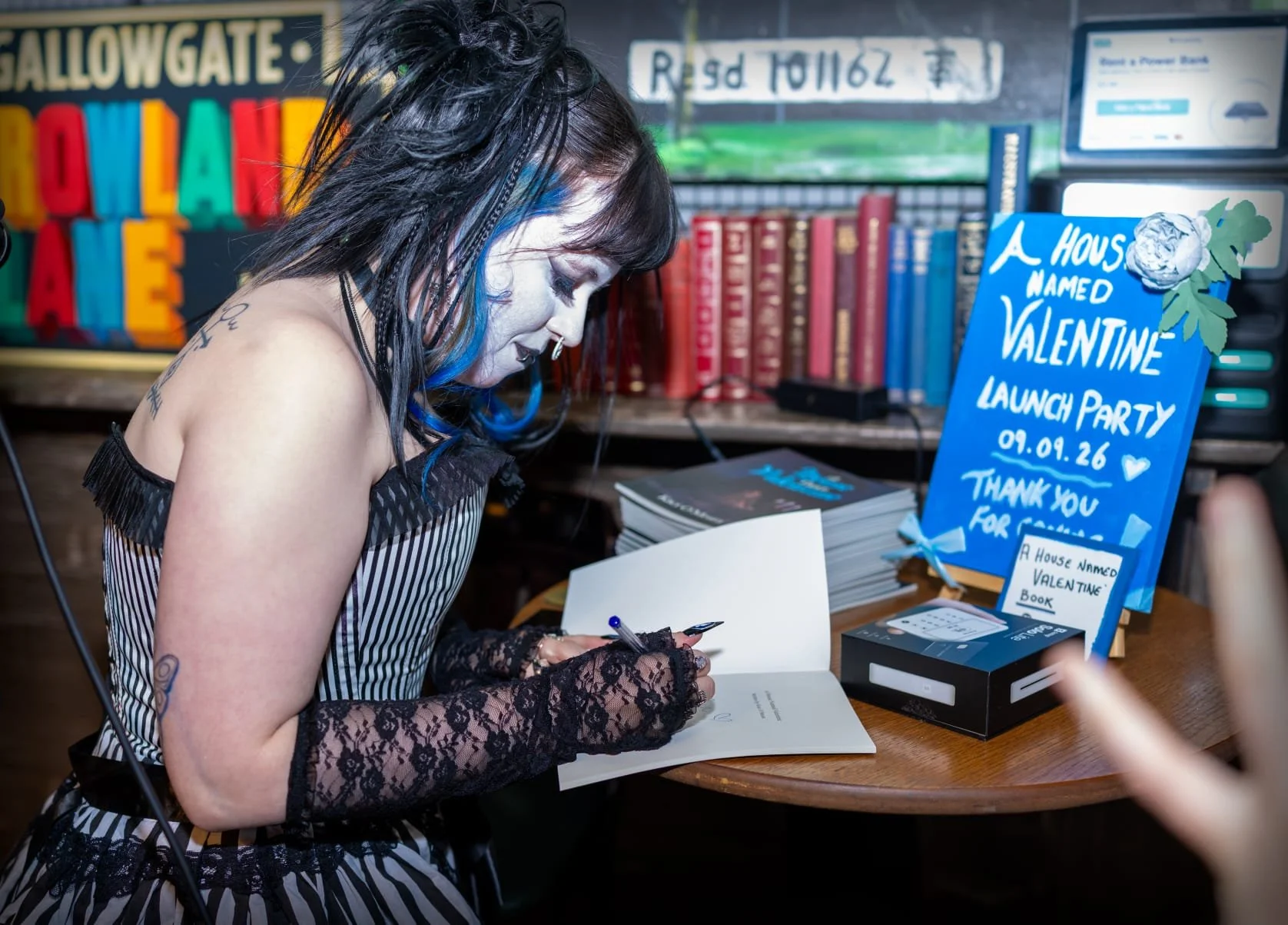
Photography by @lonewolf_photography
Q: What do you hope the readers feel?
A: I wanted to shine a light that being extremely isolated and neglected while silently struggling with mental health issues can break the human mind. All of Charlotte’s feelings came from my own and I hope that in its own way, this book will comfort those who have experienced similar trauma. You know when you’re sad and you listen to sad music? Kinda like that.
That being said, on the other side of the spectrum there is a little part of me that wants people to read this and think ‘what the fuck is wrong with the woman who wrote this?’ It’s an unsettling story that doesn’t pull any punches and I want people to sit in the madness and raw emotional pain that is uncomfortable to face. Her pain is ugly, and destructive, but what Charlotte feels, although extreme, is not unfounded. My main hope above all else is that readers will develop a deeper understanding of how someone can reach their breaking point, and eliminate the taboos and stigma that exist around women in crisis.
Q: The book makes a point at not only being very Scottish but very Glaswegian, how important was this for you and why?
A: Initially the story was set in England, and it was very late into the self-publishing process that I changed it to be more distinctly Scottish. When I was thinking of the characters and setting, I wanted it to be a bit high class and posh, so it was a better juxtaposition to the eventual spiral into blood and madness, like mixing Bridgerton with Scream instead of Gossip Girl, and for some reason that meant them being English. When I started performing poetry, I softened my accent and my slang to come across more professional because I saw poetry as highly sophisticated. Subconsciously, I was associating my Scottishness with being improper because I was constantly being corrected when I spoke Scots as a wee lassie.
I have always been incredibly proud of being Scottish and the way that I speak, and once I started to showcase that on stage, I actually had a few poets say that I sounded much more comfortable on the mic, and that’s when I decided to change course. There’s plenty of English representation in period pieces and horror, and I’m much happier with the finished book having made the switch. It’s not the most overtly Scottish piece of literature out there, but I wanted the connection to be undeniable, given the historical oppression against Scotland and our languages.
Q: You are completely self published, how did you do it?
A: Initially it felt like I was about to take on the world, and it was a very long and sometimes stressful journey, it requires a lot of planning, and thankfully I’m someone who loves a schedule. I could never have done something like this just a few years ago, even though I thought about it, it always seemed like an impossibly overwhelming feat, but I was ready for it this year. When I decided to self publish after being offered dodgy hybrid contracts, I had to sit down, and I mean really sit down to research the self publishing process and make a detailed plan and timeline to keep myself right. I wish I had a more professional sounding answer but all that it really came down to was having the willpower to push through even when I was terrified of failure.
Q: Were there any major setbacks or surprises?
A: I was pleasantly surprised but incredibly unnerved at just how little issues I had throughout the process of self publishing. I could never fully relax because I was waiting for something major to mess up my plan, but that never happened. The only thing I can think of that counts as major was the front cover illustrator had to back out quite close to the deadline for when I wanted the cover to be finalised, which I was panicking about since I didn’t have time to commission another artist and I was set on having the cover be illustrated. I re-organised quickly though, and thankfully after a few days I found @raelikeslenses, a photographer in Glasgow who could work with my timeline. I’m thankful for that set back, because I am incredibly happy with the end result.
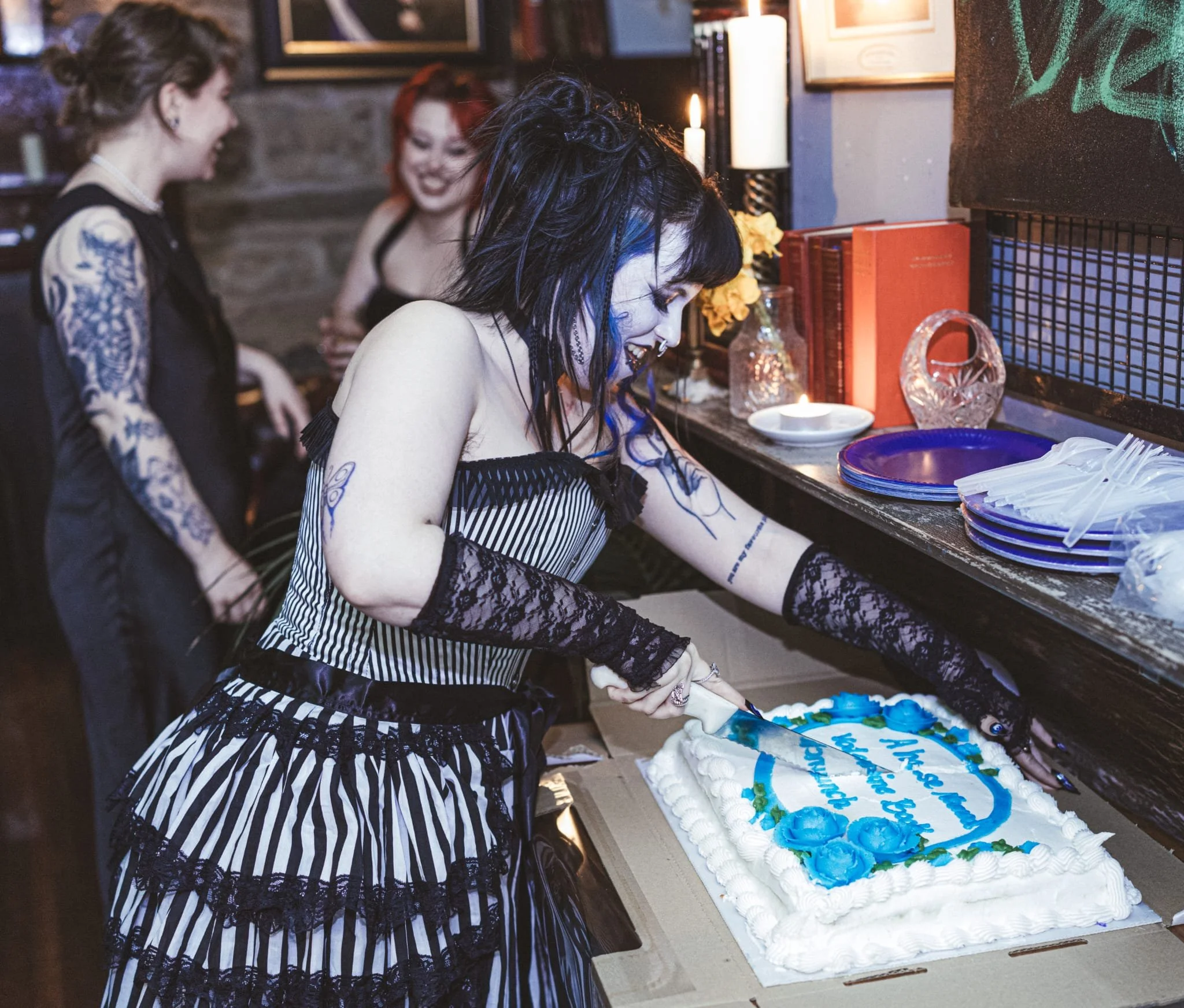
Photography by @lonewolf_photography
Q: This story does not shy away from sexual language and confident desire from your main character and other women in the story, it is so refreshing to read in not only horror but also a period piece. Were you conscious of any classic tropes/stereotypes you wanted to break?
A: Admittedly no, there weren’t specific tropes I was conscious that I wanted to avoid when writing the sexual language. When it came to writing the ladies at the social club, I was very inspired by my female friends and the conversations we have around sex. Even in 2026, female desire is still treated as taboo and I wanted to inject a bit of modernity into the time period because women talk about sex, they always have, and I hope that throughout the story it comes across as natural and doesn't make a spectacle out of female desire.
What was most important to me while writing the sexual scenes was not to portray them as what Booktok would call ‘spicy.’ The inclusion of Charlotte’s intimacy with the house is not meant to be a racy smut break, she isn’t suddenly satisfied in a traditional gothic twist where the house is a metaphor for her repressed desires, it is the point of no return in Charlotte’s fracturing mind. It’s not supposed to turn people on, it’s supposed to make you think ‘oh my God, she’s lost the plot’ and I worked incredibly hard to portray that. Her loneliness and need to be loved drove her to such an extreme place that she traded one toxic relationship for another.
Obviously my work may be interpreted in a way that I didn’t intend, and I welcome that, but with the rise of poorly written ‘spicy’ ‘ dark romance’ books flooding the market, it was important to me not to have A House Named Valentine associated with those genres. I felt it would reduce this incredibly emotional and devastating story of struggle into another trend and overlook the message.
Q: What do you have to say to writers who may be struggling to get published or are unable to afford the traditional route?
A: When it comes to publishing, I think the traditional route is the cheaper option, but it is harder. I was only ever offered hybrid contacts from publishers, which I wouldn’t do personally, but if you are considering it please do extensive in depth research of the companies, because if I hadn’t, I would have been down a financial hole with no reward. My biggest piece of advice is to get a solid portfolio of work to showcase. There’s no shortage of online magazines looking for work, which is helpful to build a published portfolio, but you have to accept there’s very little or no money unless the open calls offer payment, the best you can get is a free copy of the issue your work is featured in. Get involved in your local writing scene, read at open mics, make connections and find opportunities. These are the building blocks that support your writing career, and sometimes you have to build a presence so people know you are here, and play the long game.
Q: What’s next for you?
A: As of finishing A House Named Valentine, I’m going to focus on putting together a poetry anthology. As much as I enjoy fiction and I still have fiction I want to share, I am a poet first and foremost, and I’m excited to finally be considering a collection. I don’t know yet if it’s going to be a pamphlet, a Fringe show, a full collection, or maybe all three. I have so many ideas rattling around in my head and sometimes they change at a whim, even though my writer's block has been a killer, rest assured it will be my signature brand of hard-hitting emotional damage with just a wee sprinkle of weirdness!
You can purchase A House Named Valentine at dollgrrrl.sumupstore.com and in person at Sector 7 Books in Glasgow.
