
Captivating Physical Theatre: TSURU: My Crane Wife Review | Katie Veitch
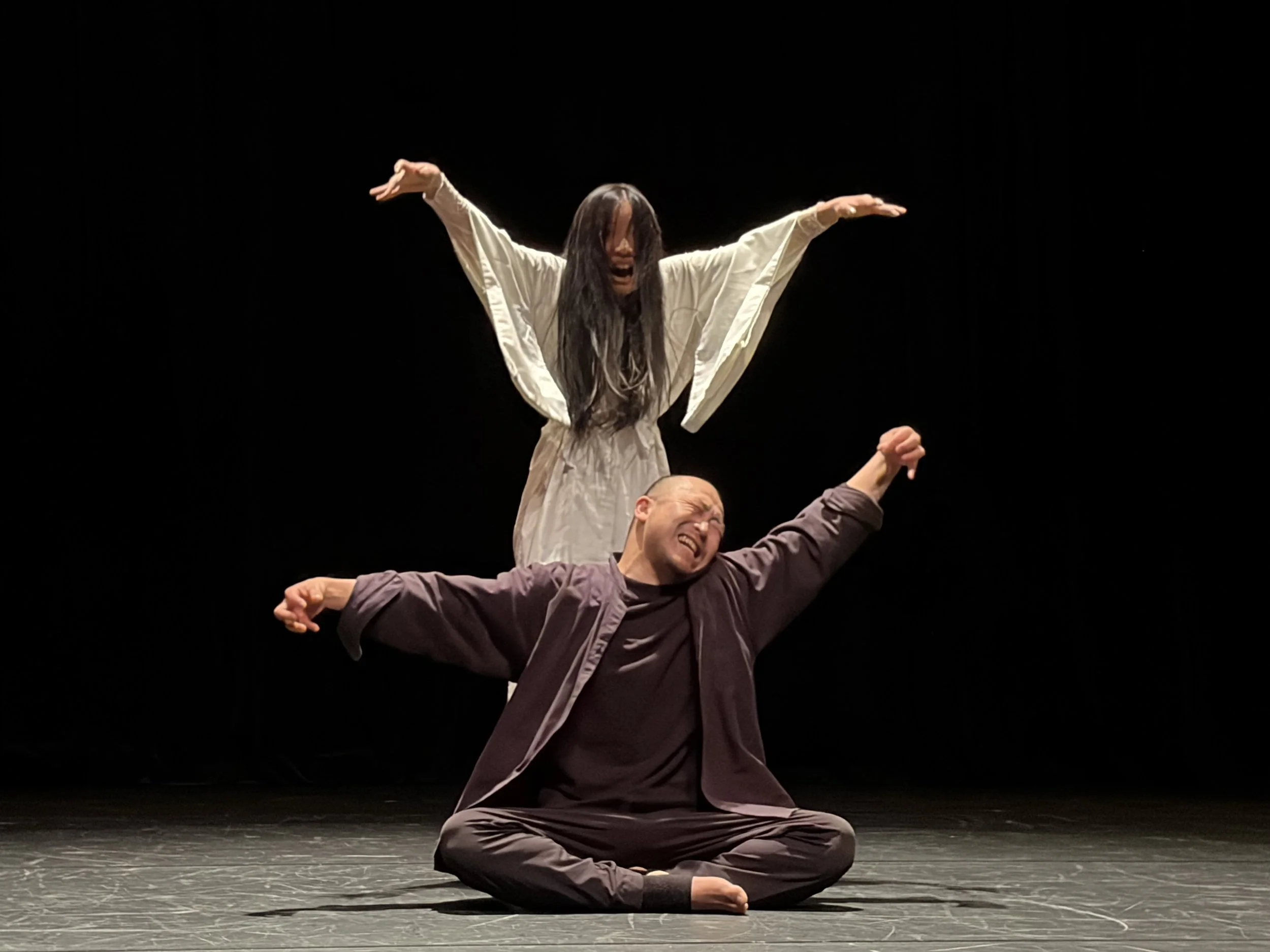
Image credit: Space GIGA Theatre Troupe
★★★★
TSURU: My Crane Wife by Space GIGA is as much a performance as it is a workshop for the imagination. The language tells us a story in Japanese, and almost no details are lost due to the performers’ outstanding expression and the choreographers’ understanding of movement through physical theatre.
We are told the parable of The Crane Wife in which a man comes across a crane caught in a trap and sets it free. By nightfall, a woman comes to his home and asks to become his wife. The couple are poor, and so she offers to weave a cloth for them to sell, as long as he never enters the room while she works. His curiosity gets the better of him and in peeking, he finds a wounded crane plucking its own feathers to make the cloth. His discovery of betrayal causes his crane wife to vanish before his eyes.
This entire story is told through the body, the face and expressive vocal sound. The faces of the two performers’ are totally captivating, and impossible to look away from. The use of the body is outstanding, inspired by a Japanese acting technique, the Michizo Noguchi exercise, in which the physical form should become liquid in order to transfer information from the mind into the body. Geometry is a major focus of the composition, with both actors creating art with their alignment to one another.
The ultimate appeal of this show is the use of physical theatre to cross language barriers. It evokes the origins of oral storytelling and draws the mind to ancient cross-culture pollination, in which the body existed before printing. I even found some sections of the show quite horrifying, and to create horror with just two people and their movement, no musical accompaniment other than their own vocals is very impressive. While the second part of the performance, a solo interpretive dance, feels a little repetitive to me, it actually emphasized the impact of the first section.
I had the pleasure of meeting one of the performers, Fu Yung after the show, and had a great discussion with him on the production and its importance.
The actor expressed that this performance is an experience for the imagination. The body tells a story and should highlight similarities between our cultures, pulling on personal memories for each audience member as they fill in the blanks.
We discussed how resistance can be channelled through art, and he highlighted the connections that art can form between people who would otherwise live very personalised lives. The exploration of lives beyond your own was an important aspect of consuming art for Fu Yung, and he imparted some wonderful wisdom on a thought to engage with while viewing performance: “If you feel you are in the majority, you should aim to learn about the minority. If you feel you are in the minority, you should question whether joining the majority is what you truly desire.”
I asked the team what they wish for people to learn from Japan through this performance. They expressed the importance of digesting information deeply, patiently, before responding and to then really incorporate that information in an expressive reaction. A simple, but poignant observation, that left me with much thought, particularly during festival season. To consume, think, really integrate what we have seen with our conscious, and to respond in a way that is engaged and active.
TSURU is a deeply creative and emotive show that I would certainly recommend to those curious about Japanese culture and physical theatre.
TSURU: My Crane Wife was performed from 17-22 August at Paradise in The Vault as part of Edinburgh Fringe.
By Katie Veitch
