
Interview: The Face Before You by Mohammed Moussa | Bethany Watt
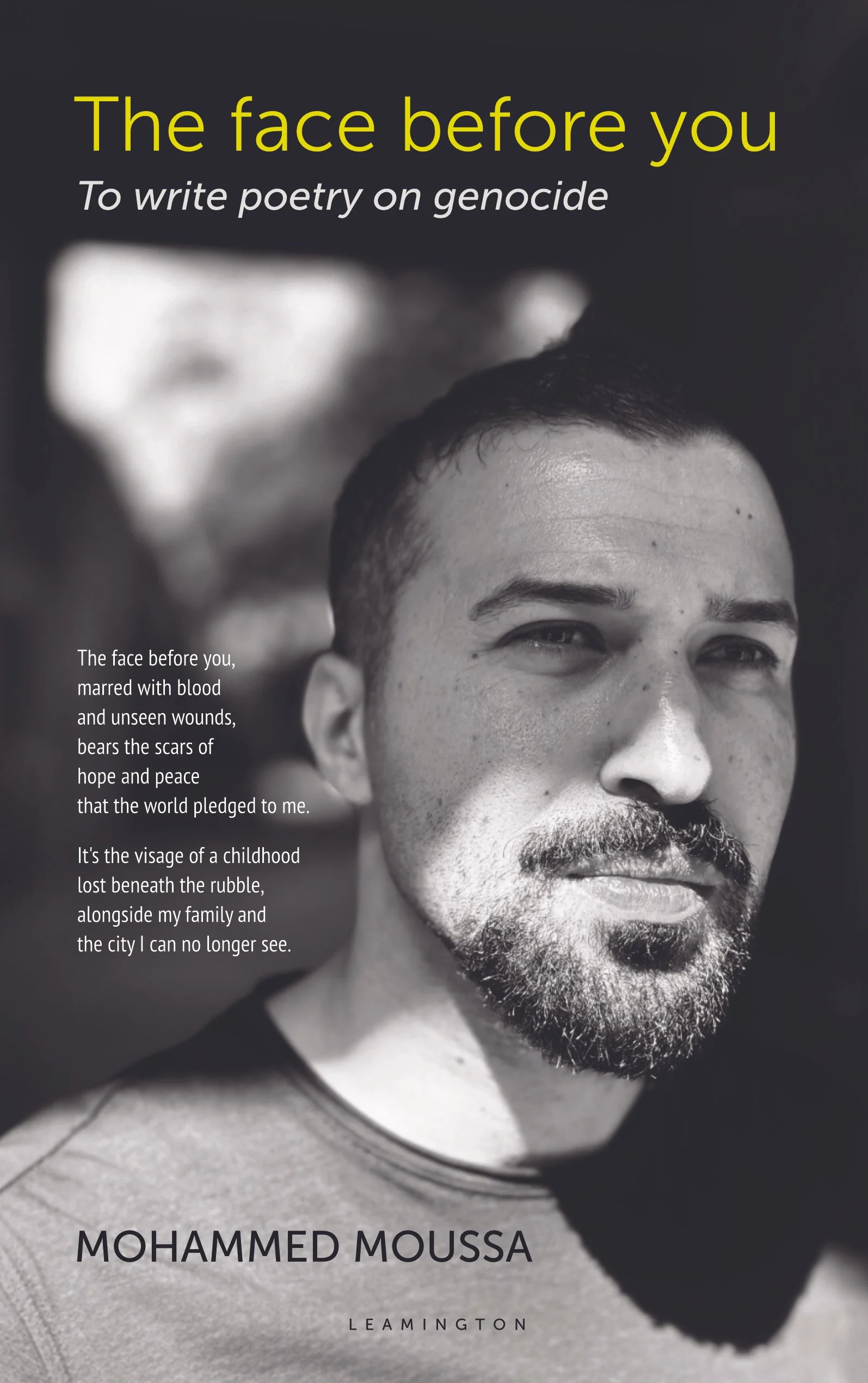
The Face Before You- to write poetry on genocide Front Cover
Disobedient had the honor of attending the book launch of poet Mohammed Moussa’s collection The Face Before You last month.
Mohammed has dedicated this book of poetry to the family members he has lost to the genocide in Palestine, in it he draws from the depths of emotion unique only to those who have suffered unimaginable hurt.
At Waterstones Argyle street, audience members got the chance to hear Mohammed recite some of his work and to ask him questions, an incredibly moving few hours in an intimate setting; feelings of deep sympathetic pain and admiration filled the room.
After introductions, Mohammed discusses the feelings surrounding his work: “There were times when that weight of grief and pain was a bit lighter because of poetry, because of sharing it with the world as a poem, not as a story, not as a video but just me trying to fathom what is happening to me and my people.”
“There were so many times where writing a poem would feel like a crime, and I even wrote a poem on this, writing poetry in times of genocide and how the language itself changes as you write about these horrors.”
“Even language bleeds when you write about these horrors. There were times when drinking water and eating a meal would feel like a crime. My nephews and nieces aren't able to eat properly or find shelter.”
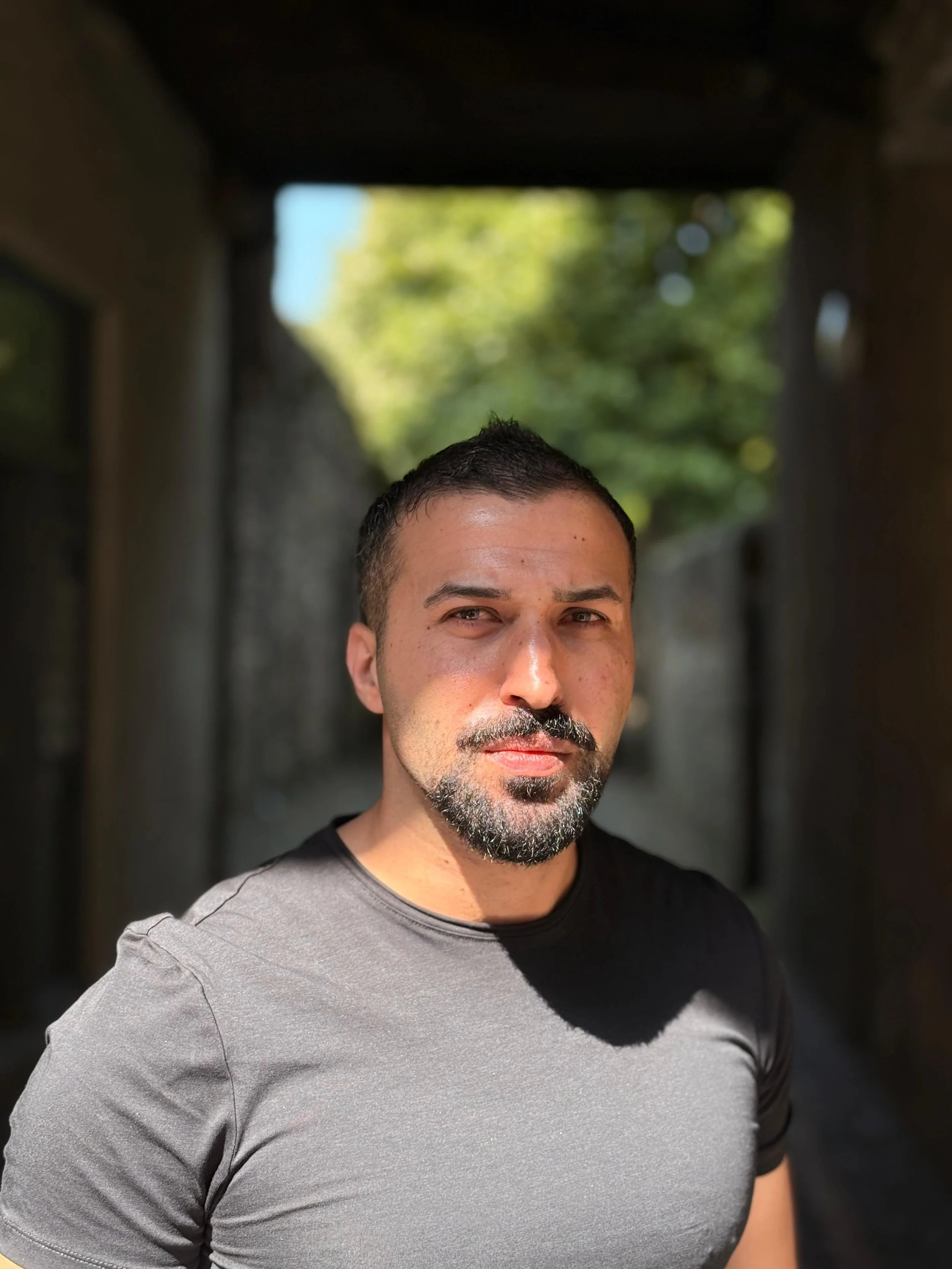
Author Mohammed Moussa
When answering a question on the origin of his poetry collection, Mohammed said: “I was very keen to talk to the world in the early days because I was hopeful that they could have the power to stop this, to stop the genocide. But I think what I like the most as a palestinian is when I see what is happening in Palestine as a cause, brings people together.
“There were times we would lose faith in the whole world and even question if the world sees us as who we are- it depends what humanity is to you and the world. When the world did not respect our loss, did not respect our blood, did not respect the words of the victims one after another, We lost faith so many times in Gaza. So it is really beautiful whenever the world would come together for Palestine and march for Palestine.”
You can watch a clip of Mohammed reciting his poetry below:
With the current climate in the UK, simply publishing the words of a Palestinian is a form of defiance. I spoke with Katie Veich, publisher at Leamington Publications, on the ways that poetry as an art form can be used as a kind of resistance: “I believe art does two essential things that make it powerful as a form of resistance. Firstly, it allows us to express feelings and experiences in a way that factual language cannot always deliver.
“While editing Moe’s question, we came across one line of poetry that I just couldn’t see through, I didn’t understand what he was trying to convey with it. I asked him what he meant by this line, and he replied ‘exactly what it says, if I had another way to say it, I would.’ I just had to dig deeper to get to the meaning, but his entire work is about expressing that which is almost impossible to express otherwise. These feelings are at the heart of resistance and give it the power to push forward.”
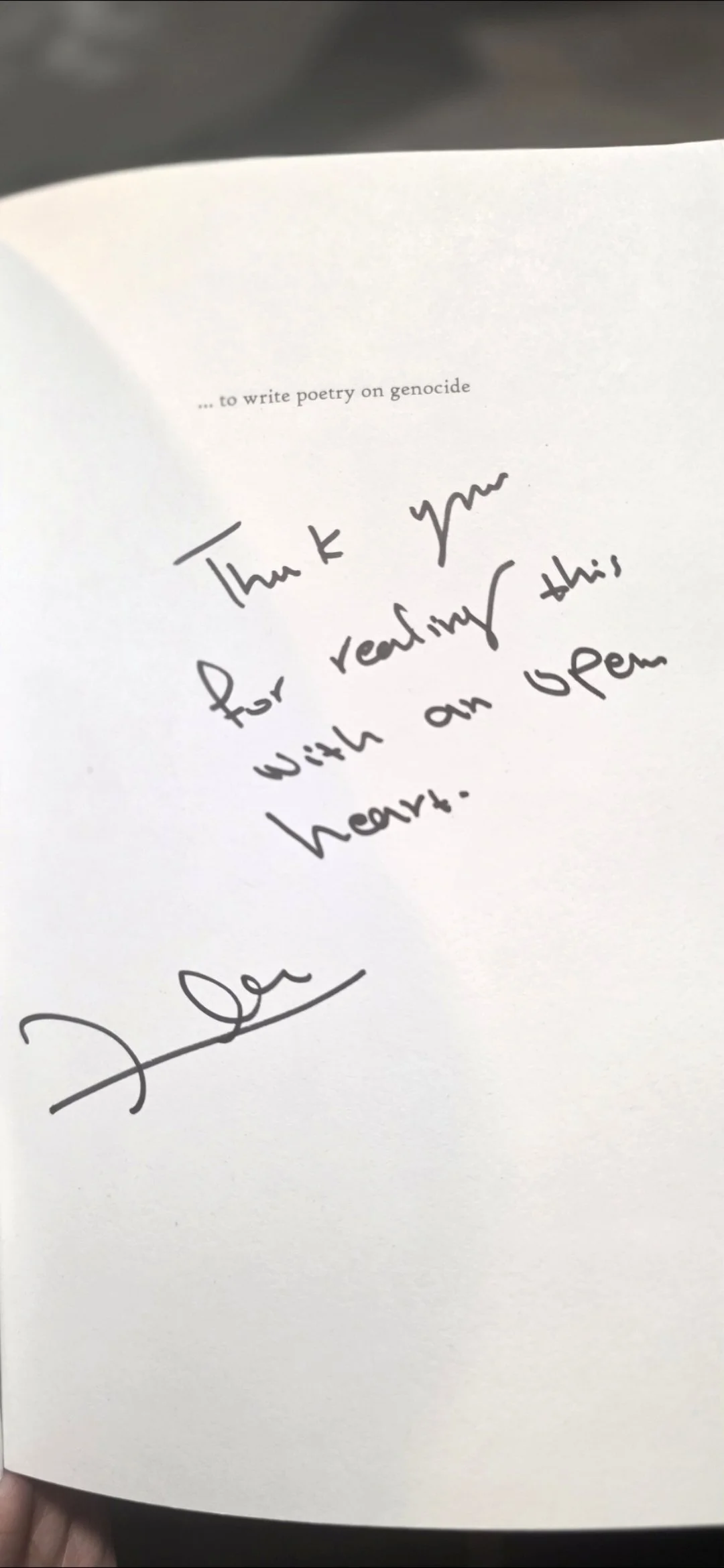
Signed Copy by Mohammed Moussa
Katie added: “Secondly, I think art makes very challenging topics of resistance conversational. It can be hard to discuss the dismantling of huge regimes or systems of oppression. It can feel like trudging through tar, never quite able to get to the final solution, as they are huge feats.
“But art - poetry, fiction, painting, sculpture - makes it something you can discuss with your friends. By having something specific in front of us, we can discuss how it made us feel, how it might make others from different backgrounds feel, and how we want to respond to it going forward. Resistance is massive, and I think art makes it surmountable.”
You can watch Peter Burnett, publishing director at Leamington books, respond to our questions about The Face Before You- to write poetry on genocide below:
After reading this collection myself, I encourage you to participate in reading the works of Mohammed. You may be an advocate for Palestinians, you keep yourself educated on the genocide, you donate to the hope of their freedom, and reading these poems will give you a deeper understanding of what it is like to live, breath and grieve as a Palestinian. To write poetry on genocide is to cry, to read poetry on genocide is to listen and to talk about it is to take action.
About Bethany
She/her
Bethany Watt is Disobedient Magazine’s Deputy Editor and Current Affairs Editor. She has freelance experience with STV, the Royal Television Society, and the Scottish government. Her favourite subjects to cover include human interest stories, activism, and film. She’s always keen to hear new stories. You can contact her at bethanywatt90@gmail.com.
