
access2transport: A campaign for better accessibility in Glasgow’s Subway | Bethany Watt

Graphic by access2transport
access2transport, a group campaigning for better accessibility in public transport in Glasgow, is calling for better wheelchair access in the Glasgow subway. They are raising awareness online and have recently gotten traction after highlighting that only two subway stations out of the fifteen in the city have acceptable wheelchair access.
The “Clockwork Orange” is 129 years old, a staple in the day-to-day run of the corporate city. Since 2023 the Glasgow Subway has had major changes like replacing trains for the first time since the 70’s and having major refurbishments to stations, unfortunately accessibility was not at the forefront of the revamp.
On their 125th birthday, SPT (Strathclyde Partnership for Transport) released a statement discussing the historic triumphs of the subway, stating: “Glasgow saw a spectacular population growth throughout the 19th century as people came to the city for work, making it a priority to move people about the city as demand grew for a public transport system that was quick, good value and accessible to all.” Quick, sure. Good value, compared to other options, absolutely. Accessible to all? False. This quotation can be found on the SPT website here: https://www.spt.co.uk/125/#:~:text=The%20Subway%20is%20the%20world's,value%20and%20accessible%20to%20all
I spoke with Rae, the founder of access2transport, about why they took to online to protest: “After I began seeing the ‘modernisations’ so clearly not having access or disabled people in mind while making these designs, such as ticket scanners now placed higher, making it passively hostile in the architecture. This is going backwards, when we should be pushing for access forwards. access2transport is for reminding people that access is for all, and the public can make a change. We want to work with everyone to make real, tangible change happen.
“The Glasgow subway only has two out of fourteen accessible stations, St. Enoch and Govan. Recently, it has been announced, at this point not by SPT themselves, that Hillhead and Buchanan Street are to have work done to make them accessible. Dates of this work have not been announced.
“This is a start, and even after this work, four out of fourteen stations aren’t enough, and we will continue advocating for disabled access until all of the subway is accessible.”
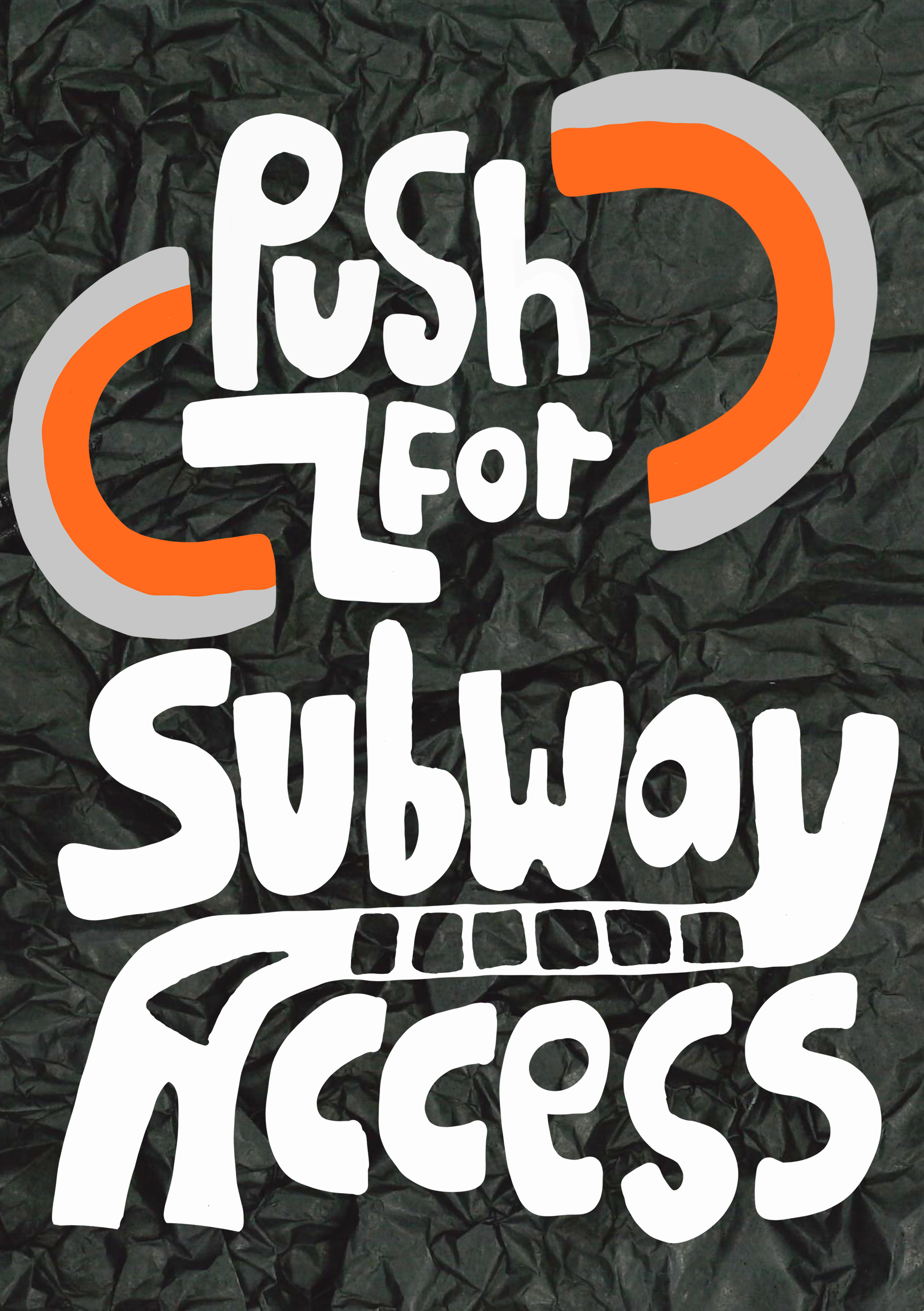
Graphic by access2transport
When asked to go into detail about the extent of the inaccessibility, Rae said: “The trains are inaccessible to the blind and deaf. For blind people, there are no announcements to let them know where they are arriving, so it’s impossible to keep track of where you are. And for deaf people, the maps are in such difficult places to see, especially in rush hour. Everyone should have the right to public transport.”
Sharing their own experience, Rae added: “I myself, when using the subway on my own, bum-shuffle down the stairs with my wheelchair in front of me. This is not only stripping me of any dignity, but is also exhausting and painful. Unfortunately, when buses often refuse me or drive off, and taxis are far too expensive for daily commute, the subway is the only form of public transport I know will get me where I need to be on time.
“However, I am still lucky to be in the position to be able to put my body through this. Most disabled people cannot. My close friend Ciara and I have conversations about access. They are a wheelchair user unable to use the subway, to get from their uni to town, it can cost over £40 to just get to the city centre, whereas if they could use the subway, it would be £3.50 for a return trip. This is a disgrace.”
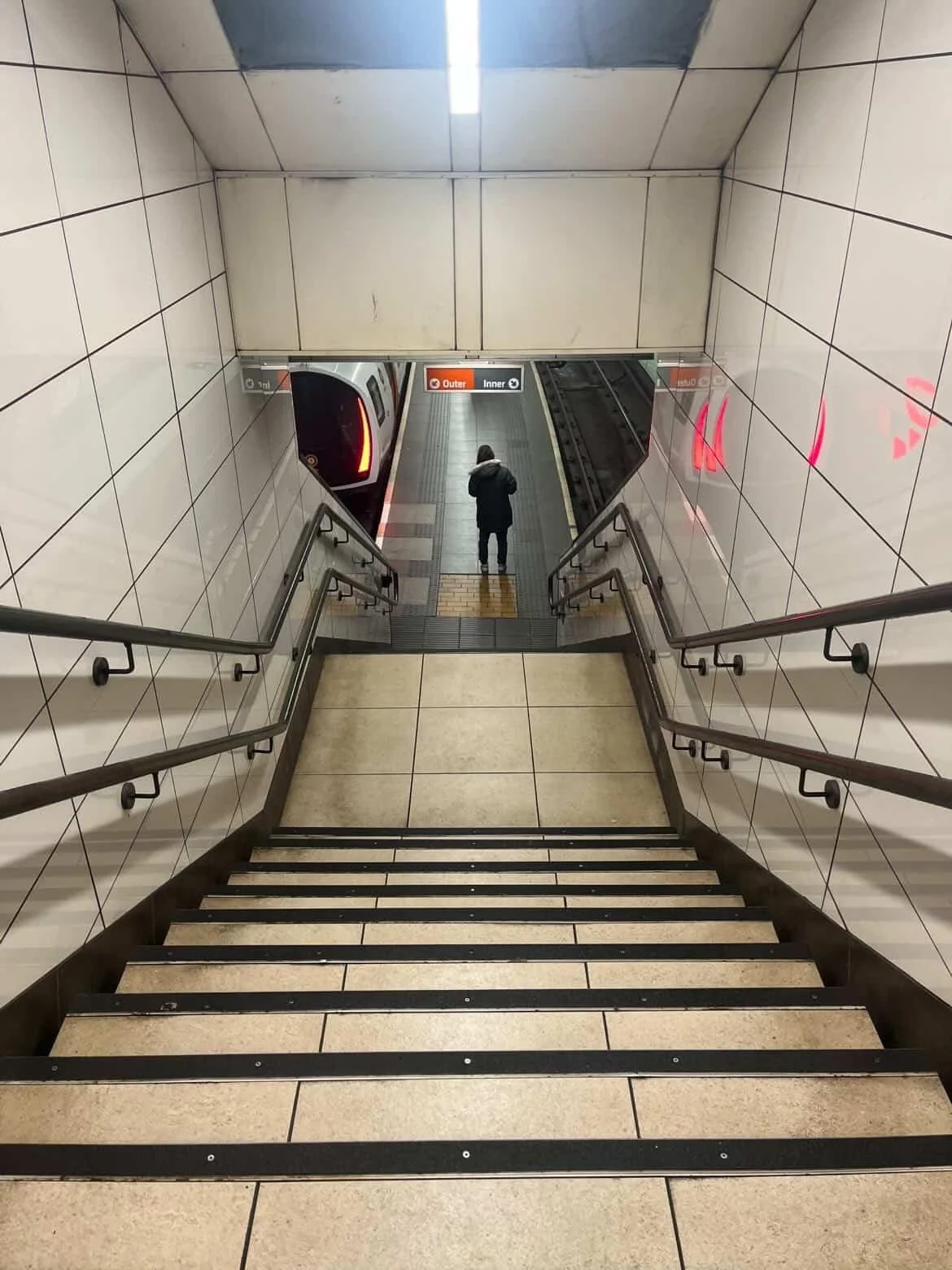
The view from the top of the stairs at a Glasgow Subway station.
access2transport has emailed SPT expressing their concerns, they have received no response.
Since activating their Instagram account, they have gotten a lot of feedback: “People don’t often think of access if it doesn’t affect them or someone they love directly. This is pushing the issue to people who don’t necessarily have firsthand experience with disability and helping people realise that they should care about this too. Making people aware that access positively affects us all.”
On what you can do to help, Rae added: “Talk about it. Talk about it with your friends, family, and colleagues. Spread the word! The only way change can happen is if people know the change needs to happen in the first place.”
You can find the access2transport Instagram account here: https://www.instagram.com/access2transport/
About Bethany
She/her
Bethany Watt is Disobedient Magazine’s Deputy Editor and Current Affairs Editor. She has freelance experience with STV, the Royal Television Society, and the Scottish government. Her favourite subjects to cover include human interest stories, activism, and film. She’s always keen to hear new stories. You can contact her at bethanywatt90@gmail.com.
